Those two thin glass panels flanking a podium during a big speech are a presidential teleprompter. Here is how the trick works, what the hardware costs, and why almost nobody recording a video or giving a normal speech actually needs one.
How the Glass Works
Each panel is a beam-splitter: glass with a partially reflective coating. A monitor lies face-up on the floor at the base of each stand, scrolling the speech. The glass sits at roughly 45 degrees above it, so the text reflects up into the speaker's eye line while the audience looks straight through what appears to be plain glass.
The two-panel arrangement is the clever part. With text mirrored on both sides of the podium, the speaker can turn to address the left and right of the room and never lose their place. That side-to-side rhythm, which reads as commanding the whole room, is partly just following the script from one panel to the other.
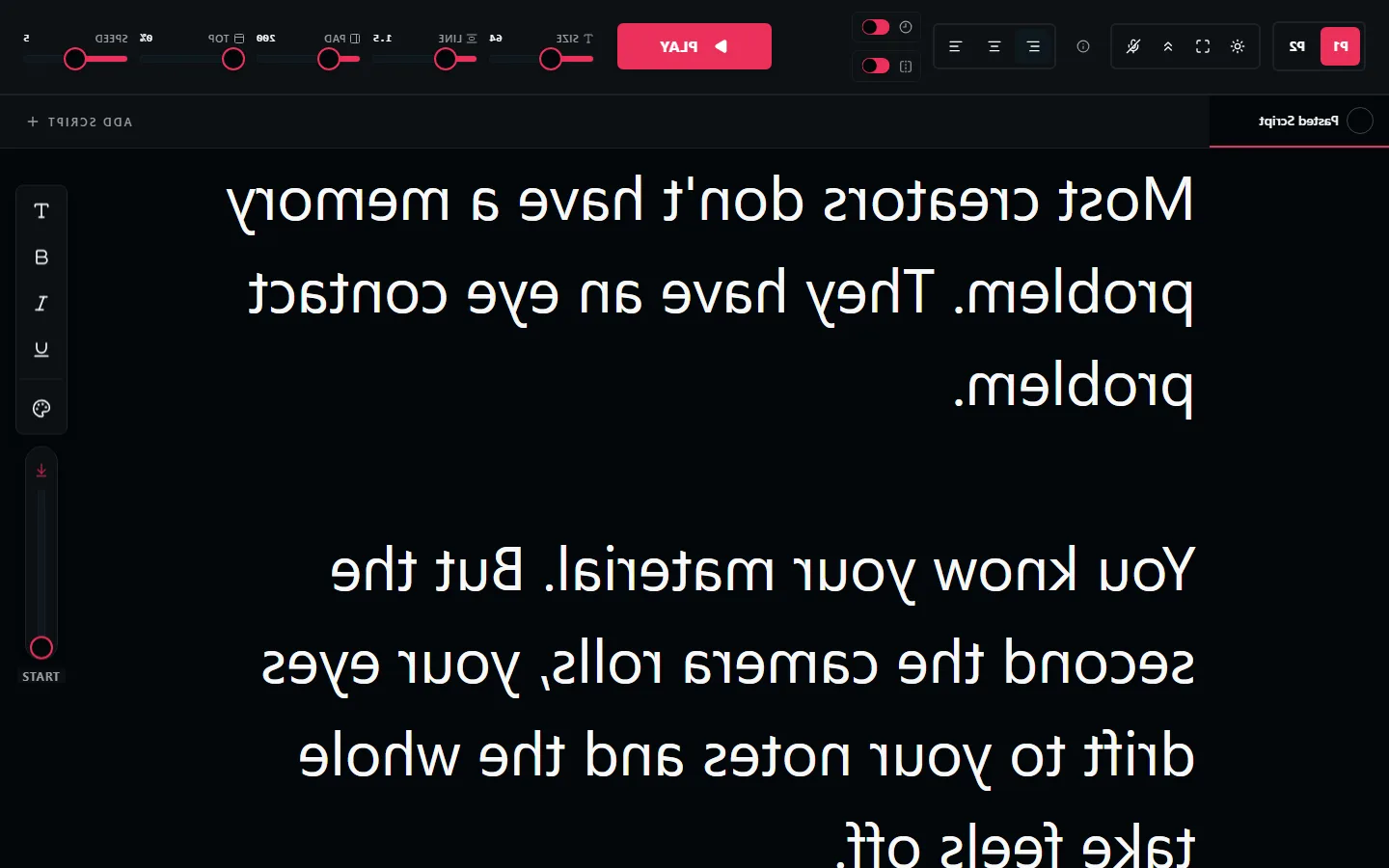
Because the reflection flips the text, the monitor plays a mirrored feed, which is exactly what the mirror mode setting in prompting software is for. An operator usually rides the scroll speed live, matching the speaker's pace through applause and pauses.
Podium Glass vs Camera Rig vs Software
| Presidential (podium glass) | Camera-mounted rig | Browser teleprompter | |
|---|---|---|---|
| Built for | Live audiences at formal events | Studio and video recording | Video, calls, and practice anywhere |
| What the audience sees | Clear glass panels | Nothing, glass sits over the lens | Nothing, screen sits off camera |
| Typical cost | $500 to several thousand | $80-500 plus a tablet | Free |
| Setup | Stands, monitors, operator | Rig, camera, mirror-mode software | Open a browser tab |
| Eye contact | With the room | Perfect, through the lens | Near-lens, very good |
When You Actually Need One
Podium glass earns its price in one situation: a formal address to a live audience where holding notes or glancing at a screen would break the moment. Political speeches, keynotes on big stages, award shows, formal corporate town halls. If that is your event, rental companies supply the glass, stands, and an operator.
For everything else, the economics flip. Recording a video? A camera-mounted rig or a screen next to the lens does the same job. Giving a speech over video, or rehearsing one for a live room? A speech teleprompter in the browser scrolls the same text with the same control, for free. The technique the presidential setup enables, reading while looking at your audience, works at every budget. The glass is just the most expensive way to buy it.